A speculative urban project exploring alternative forms of participation and urban justice. The city becomes a space of conflict, negotiation and possibility.
Collaborative project · With: Alexander Schmale, Lukas Zerrahn, Samuel F. Hege
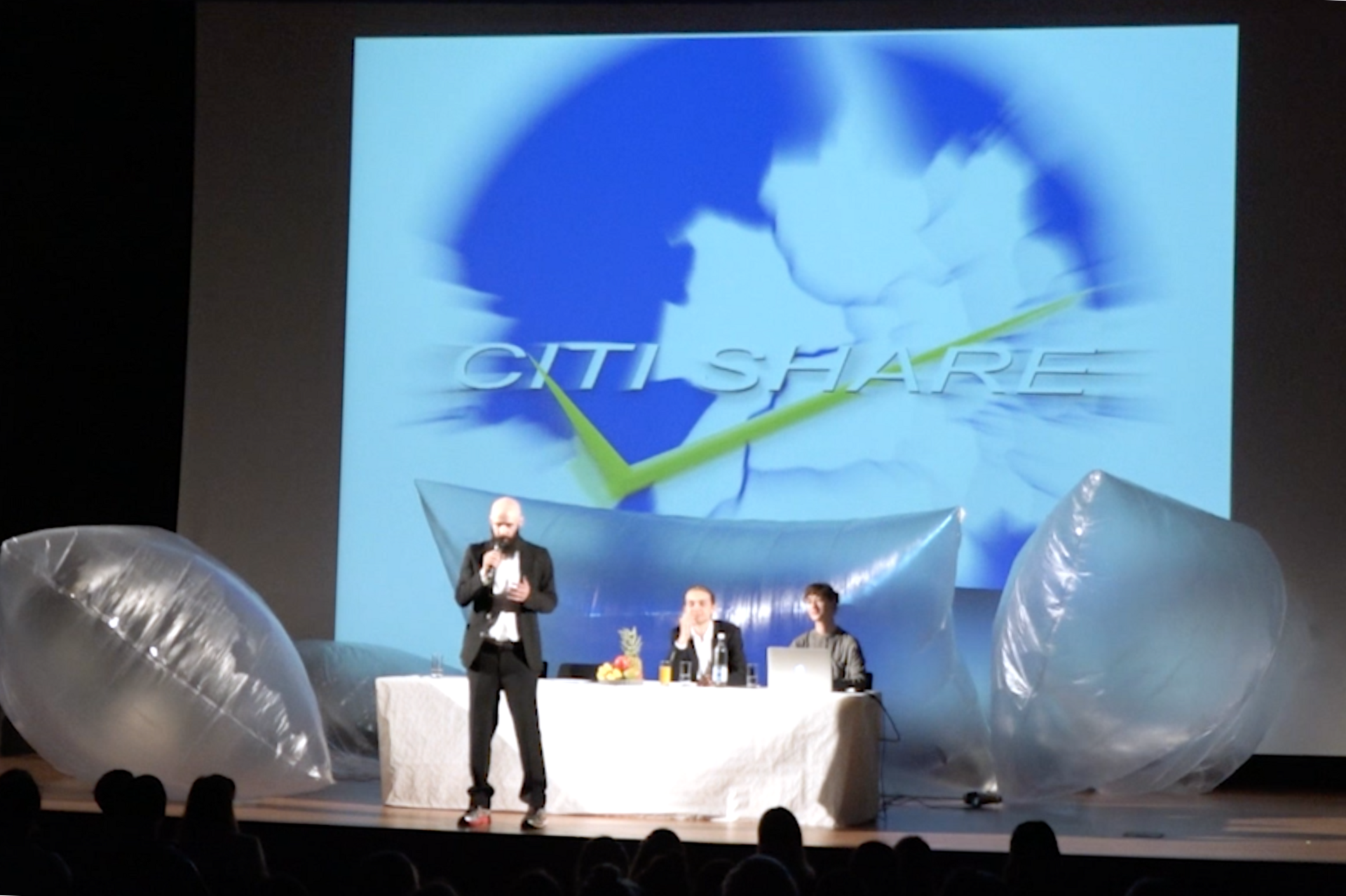
Citi Share explores the city as a space in which economic systems, political interests and everyday life intersect. The project starts from the question of how financialisation influences who can participate in shaping urban space — and what alternative forms of participation might look like.
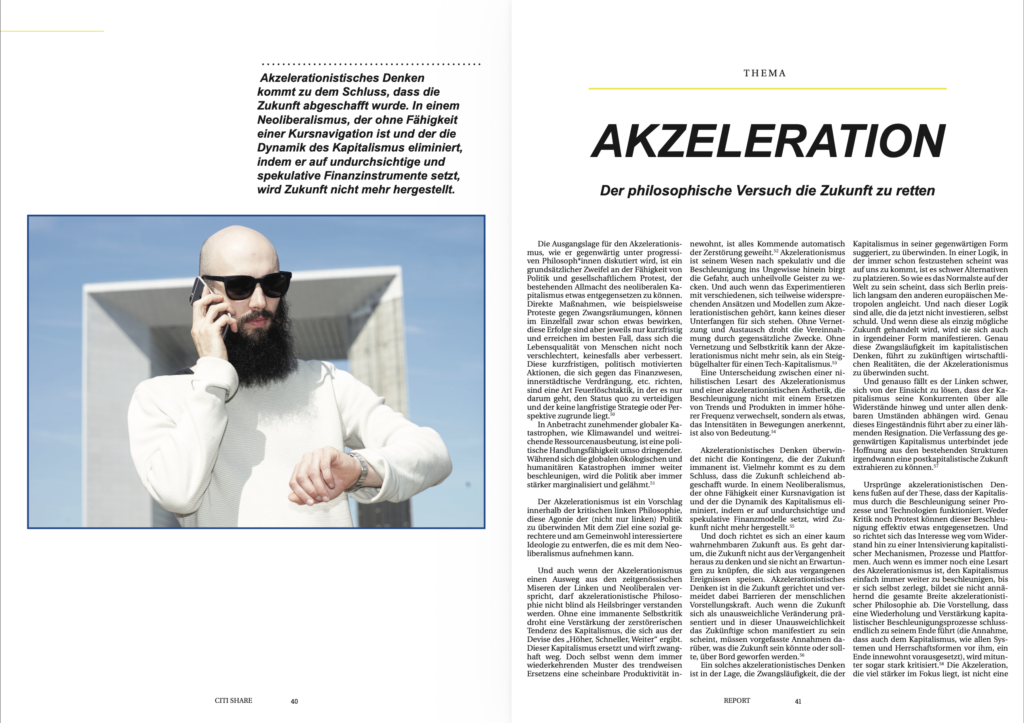
Rather than developing a speculative scenario alone, Citi Share materialised an entire fictional institution. Together with three collaborators, a non-profit association was established and a speculative financial product was developed through which tenants could participate in the economic dynamics of urban transformation. The accompanying annual report extended this fiction into a detailed institutional and economic narrative, combining statutes, financial explanations, urban analysis and visual communication.
The project follows an accelerationist approach: rather than opposing the mechanisms of financial capitalism from the outside, Citi Share appropriates and exaggerates them as a means of exploring their internal contradictions and possible transformations. At the centre of the project is the Supersession Award, a fictional financial instrument that turns displacement into a form of participation in the profits generated by rising property values. Derivatives become both a critical tool and a speculative medium through which the dynamics of contemporary capitalism can be made tangible.
The report also examines the aesthetics and narratives surrounding Berlin’s real-estate economy, including ideas of authenticity, entrepreneurial success and urban identity. These elements situate the fictional institution within a recognisable contemporary context while deliberately blurring the boundaries between critique, financial product and institutional reality.
Citi Share uses speculative design not to predict an alternative future, but to construct one convincingly enough to examine the present from within it. The project asks what happens when the mechanisms shaping the city are not only criticised, but appropriated, exaggerated and redesigned as tools for imagining other forms of urban participation.